Seattle Military Bases - McChord Field is an American airport in the northwestern United States in Pierce County, Washington. South of Tacoma, McChord Field is home to the 62d Airlift Wing, Air Mobility Command, whose primary mission is global strategic aviation.
The McChord complex was merged with the US Army's Fort Lewis on February 1, 2010 to become part of the Lewis-McChord joint complex.
Seattle Military Bases

This effort was spearheaded by the 2005 Base Realignmt and Closure Round and was designed to integrate existing infrastructure into increasing combat capability and efficiency while saving taxpayer dollars.
Southern California Company Makes Seattle Region Entrance With Lakewood Buy
The 62nd Airlift Wing (62 AW) is the squadron at McChord Field. It was assigned to the 8th Air Force and consisted of more than 7,200 military and civilian personnel. Its mission is to support humanitarian and humanitarian efforts around the world. The 62d Air Force flew around the world conducting aerial training; It also manages Antarctic supply operations.
The 62d Operations Group transports a C-17 Globemaster III from McChord Field. It consists of three helicopter squadrons and an active support group.
Other components of the wing are the 62d Maintenance Group, 62d Operations Group, 62d Controller Squadron, and 62d Medical Squadron.
Operated by the McChord Air Museum Foundation, the McChord Air Museum displays 17 aircraft and artifacts related to the airport's history.
Meet The Neglected 43 Year Old Stepchild Of The U.s. Military Industrial Complex
In 1917, citizens of Pierce County, Washington approved $2,000,000 (equivalent to $42,301,299 in 2021 dollars) in bonds to purchase 70,000 acres (283.28 km).
) of land to be given to the federal government for use as a military reserve. This land became Camp Lewis (and later Fort Lewis). A few years later, in 1927, a joint venture was launched to establish an airport north of the military reservation. The airport, named Tacoma Field, officially opened on March 14, 1930.
On February 28, 1938, the airport was officially transferred to the federal government. Three years after the trip, on July 3, 1940, McChord Field was demolished.

Who was killed in an accident near Richmond, Virginia on August 18, 1937. Col. McChord, (1881-1937), who was listed as an aviator in 1918, died while attempting a forced landing in a Northrop A-17 near Maids, Virginia. . At the time of his death, he was the head of the training and operations department at HQ Army Air Corps. Tacoma Field was demolished by McChord Field on December 17, 1937.
Cantwell Seeks Money For Cleanup Of Firefighting Foams On Military Bases
) Ft. Lewis. She became a freelancer in Ft. Lewis in 1947 after the creation of the Air Force Base under the provisions of the National Defense Act of 1947 and was later named McChord AFB.
In 1940, McChord Field became the headquarters of the GHQ Air Force Northwest Air District, with the mission of protecting the Pacific Northwest and Upper Great Plains region of the United States. The 17th Bombardment Group was moved to the new airfield from March Field, California, and was equipped with Douglas B-18 Bolo bombers.
After the Japanese attack on Pearl Harbor on December 6, 1941, the 17th Bombardment Group conducted anti-submarine patrols along the west coast of the United States with the new North American B-25 Mitchell bomber. As the first unit to operate a B-25, it achieved another first on December 17, 1941, when one of the Mitchells dropped four 300 lb (140 kg) bombs on a a Japanese ship near the mouth of the Columbia River. The 17th Bomb Group was transferred to Columbia Army Air Base in South Carolina in February 1942, where the group's personnel was selected to carry out the Doolittle raid on Japan in April.
With the departure of the 17th Bombardment Group, McChord's field mission became mission support to the Army Air Forces in training, personnel, and personnel for bomber, fighter, and reconnaissance missions. The Northwestern Air Force reorganized the Second Air Force and became the training group for the B-17 Flying Fortress and B-24 Liberator attack groups.
Best Army Bases For Families, Couples, Singles, And Overseas
Almost all of the new heavy bomber groups organized after Pearl Harbor were organized and trained at the second air bases, the II Bomber Command Training Units (OTUs), which were assigned to combatant commands around the world. McChord trained several bomber squadrons during the war, taking graduates of the AAF Training Command's Aviation and Engineering Schools and placing them in active duty squadrons that followed the steps of The second and third are for training before being sent to foreign countries to fight against aircraft.
Beginning in mid-1943, training of B-17 and B-24 replacement crews began to decline as the Second Air Force began training B-29 Superfortress Very Heavy Bomb groups for the Twtieth Air Force. As part of the new XX Bomber Command, B-29s were received from Boeing production facilities in Seattle and Wichita, Kansas, and new fighter and training units were organized, mainly in Kansas and Nebraska.
McChord also had major service points with the Air Technical Service Command during the war, serving as a P-39 Airacobra modified from April 1944 to May 1945 for ld aircraft leased to Russia via Alaska.
After the end of the European war in May 1945, McChord moved thousands of troops from the European theater to the Pacific as part of the Airlift Command in anticipation of the planned invasion of the Japanese home islands that day. November 1st. The bombing of Hiroshima and Nagasaki in August 1945 forced Japan to surrender and cancel the planned operation altogether.
A Coalition Of Support
In 1945, the Air Force designated McChord as a permanent station. It was assigned to the Royal Air Force in April 1945 and became the headquarters of the 1st and 2nd Bombardment Wings after they returned from the war in Europe. In 1948, the field was renamed McChord Air Force Base.
On August 1, 1946, McChord was assigned to the new Air Defense Command with the United States Air Defense Task Force. During the Cold War, the base housed several fighter squadrons, as well as radar and command and control groups, with the 25th Airborne Division headquartered at McChord from 1951 to 1990.
The 325th Fighter Group (All-Weather) operated two squadrons of McChord's F-82F Twin Mustangs from 1948 to 1950, the first later fighters to improve air defense. Designed for long-range bomber escort missions in the Pacific Ocean during World War II, the design entered service late and was adapted for air defense duty.
The base houses the first twenty-eight stations built by the ADC as part of the permanent air defense radar network and is the priority location for the ADC radar.
Rental Homes And Townhomes
The 505th Air Traffic Control Group, the first postwar surveillance radar group, was activated at McChord on 21 May 1947. Defense warning radar became operational at McChord on 1 June 1950 with the AN/CPS-4 and the WWII-era AN/CPS . -5 radars controlled by the 635th Aircraft Control and Warning Squadron. ADC completed the installation of two AN/CPS-6B medium detection and long-range radars in February 1951. The performance of these new radars was considered inferior to the World War II system, and the calibration process delayed readiness. Work programs on this and other pages. . In the mid-1950s, the AN/FPS-6 long-range radar was installed.
In 1958, the Semi Automatic Ground Vironmt (SAGE) Data Cter (DC-12) and Combat Cter (CC-3) were established at McChord. Authorized in 1960. The SAGE system is a network that connects the Air Force (and FAA) General Surveillance Radar to a critical location for the Air Defse, designed to provide early warning and return response to a Soviet nuclear attack. It originated under the command of the Seattle Air Defense Division (SeADS), which was activated on January 8, 1958.
The ADC radar unit (P-1) was deactivated on 1 April 1960 and moved to Fort Lawton AFS (RP-1), where the Air Force combined anti-aircraft radars with the Air Force Base Defse Area Army Air-Defse. (US Army North Seattle Defse Area). AADCP) S-90DC for Nike missile operations.
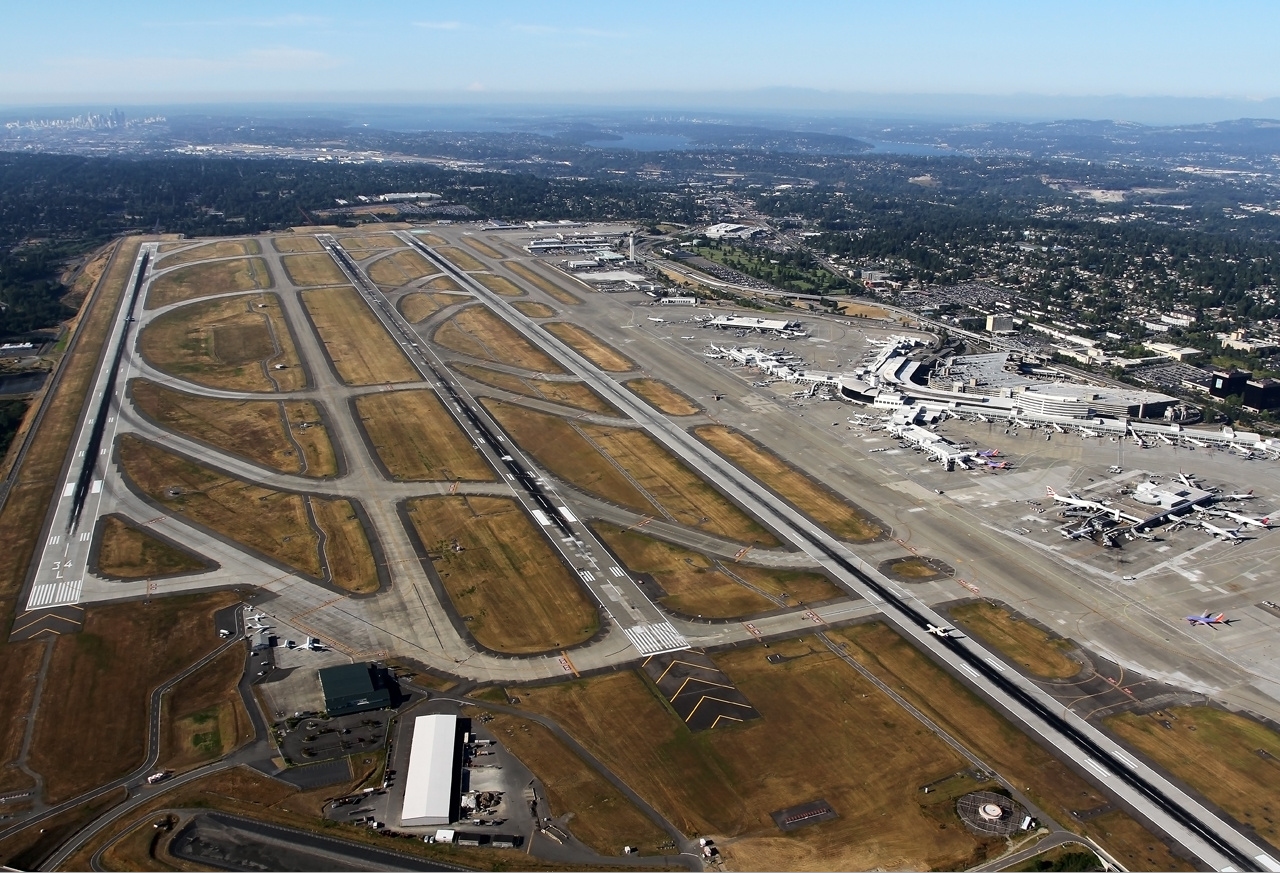
SeADS was deactivated on 1 April 1966 and SAGE Combat Command came under the 25th Air Division. Cter Command (CC-3) was active until 30 June 1966 when it was inactivated as part of the ADC reorganization. The Data Cter (DC-12) with the AN/FSQ-7 computer remained operational until 4 August 1983 AD 25, when technological advances made the SAGE system obsolete.
Seattle Seahawks Honor Military > 446th Airlift Wing > News
Today, the successor organization of AD 25, the Western Air Defense Sector (WADS), is the lead organization at McChord, one of two air defense sectors responsible for the security and safety of the continental United States. WADS has personnel from the Washington Air Force Base (WANG) and the Royal Canadian Air Force (RCAF). Operationally, WADS is controlled by the North American Aerospace Defense Command (NORAD), based at Peterson Air Force Base, Colorado.
In 1947, the Tactical Air Command moved the 62d Troop Carrier Group to McChord Field from Bergstrom Field, Texas. Air Force Headquarters directs each assigned air force to establish a wing headquarters. The 62nd Troop Carrier Wing (TCW), formed on 28 July 1947, was activated.
Military bases with lodging, military bases for sale, civilian jobs military bases, military training bases, military bases, hotels on military bases, military bases near seattle wa, military bases in seattle washington, military bases in florida, military bases in seattle, military bases near seattle, location of military bases

0 Comments