Aircraft Vhf Antenna - If you're an airplane geek, chances are good you've wondered what all those antennas are for at one point or another. How do pilots communicate with people on the ground? Where does airplane wifi come from? What antennas do they use for what? Some of these questions have interesting answers, but none of them are complicated or difficult.
On any airplane, often on its belly, you can find dozens of antennas, each of which is used for different purposes. Called an airplane by many pilots who have been in the business for a while, these antennas often help pilots communicate with other people and are often made of lightning rods or other interesting protrusions.
Aircraft Vhf Antenna
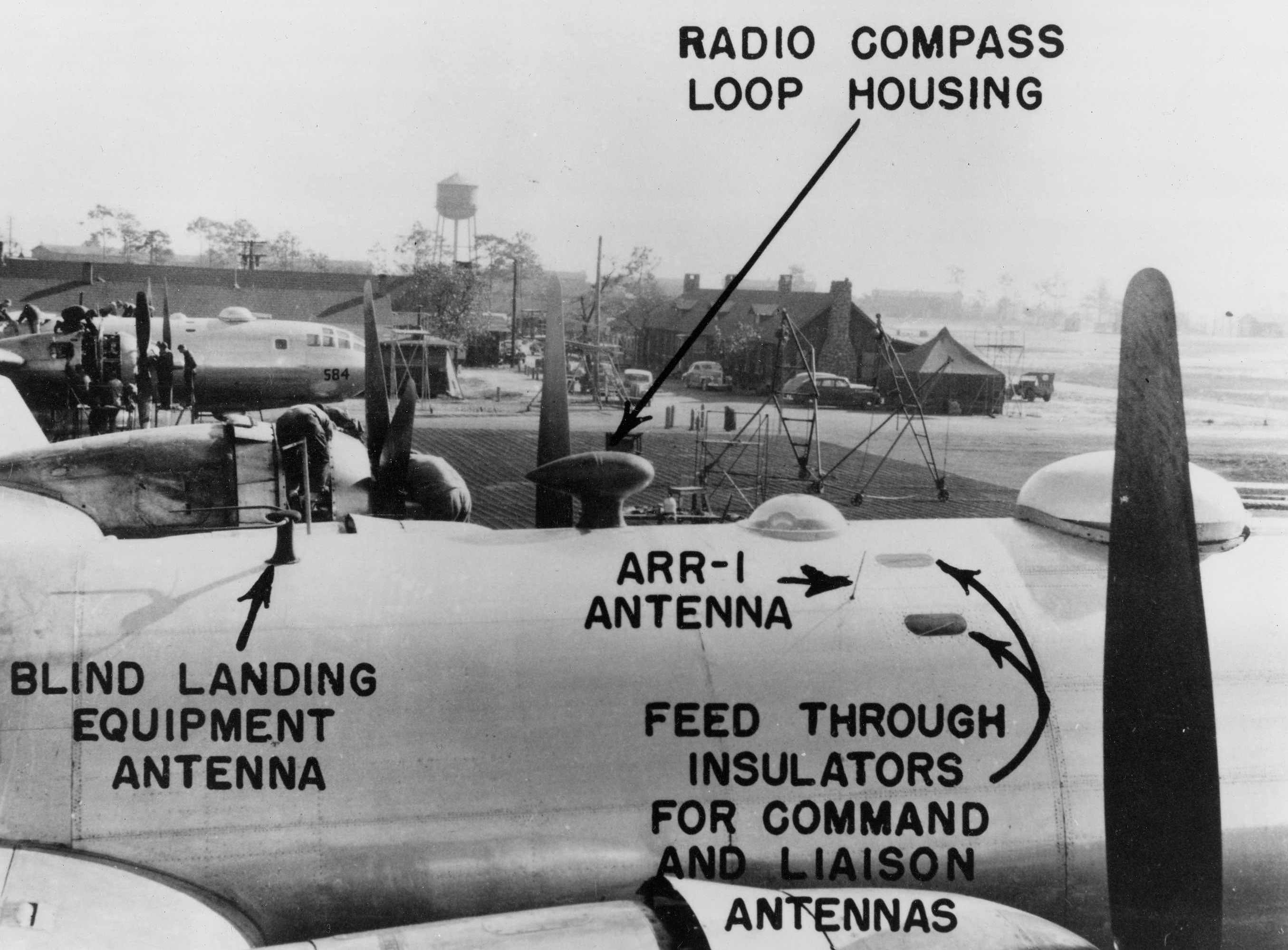
Aircraft antennas can have many different shapes and sizes, which are largely determined by the manufacturer. However, antennas are built for their function more than anything else, and their shape and placement are usually determined by their directional characteristics and the frequency at which they operate. Essentially, these antennas must be placed in certain shapes and in certain locations to function properly.
Aircraft Communication Antenna By Trivec Avant Corp. Vhf P/n 17 50 01 New
When most people think of aircraft antennas, they assume they are there for effective communications, and rightly so. Cam antennas are usually mounted on the top or bottom of the aircraft, and their only concern is the fuselage shadow effect. Each com transmitter has its own antenna, and the antenna is strategically placed as their range and coverage can be negatively affected if misplaced.
The way they work is very simple, and their placement is very important to be effective in their purpose. For example, a radio fed to an antenna above usually works best for communications when the aircraft is on the ground, while an antenna on the bottom of the aircraft usually works best. It happens when the plane is in the air. . It's not hard to understand why.
A GPS antenna that transmits less than five watts of power usually produces a very weak signal. Because of this, most GPS antennas have amplifiers designed to boost the signal for the receiver. In addition, the frequency of GPS is very high, usually in the gigahertz range, so the GPS antenna must be mounted high on the hull.
Communications antennas can interfere with GPS antennas, meaning the two antennas should be placed as far apart as possible. Suction cup antennas are often used with handheld GPS, but they can cause problems when placed on certain surfaces, such as windows. This is one of the reasons why IFR certification with portable GPS isn't happening anytime soon.
Tailhook Topics: World War Ii Navy Carrier Airplane Antennas
Long range antennas, or Lorentz antennas, look like telecommunications antennas until you look inside. Loren antennas usually have an amplifier or a small amplifier placed under the skin to boost the signal. These are intended to be placed above or below the aircraft, but you must adjust the receiver to match the specific antenna position for them to work properly.
Lauren systems are very sensitive to P-static, which results from the build-up of an electrical charge if the aircraft flies through heavy dust or rain. However, if you have properly installed airframe structures and antennas, this can often be avoided. Static build-up also occurs when the vinyl stickers on the vertical fins decide to absorb static build-up and other forms of interference.
Aircraft antennas also include loop antennas, which are shaped like—you guessed it—loops. They are also called directional antennas because they can actually determine which direction the signal is coming from. They have two or three separate coils that make them look like a flattened bagel, and each signal is received at a different strength between the coils.

Loop antennas are usually short and wide, so they have a bagel-like shape and can be found on the top or bottom of the aircraft, although they are usually on the bottom. These are the types of antennas most commonly used by lightning detection systems. They tend to retain oil and water, so a good sealing job is recommended to prevent water build-up and extend the life of the antenna.
Antennas According To Jim (ch. 2)
The marker beacon antenna must be on the underside of the aircraft, because to receive any signal, the antenna must be directly from the transmitting ground station. There are many different types of marker beacon antennas, the most common of which are small canes about 10 inches long. They are both simple and reliable.
Cessna used modified versions of the marker beacon antenna with great success. These include flush antennas, which look like flat plates located under the empennage, and thick wire antennas that run straight down from the empennage and turn towards the tail of the aircraft. Both types of marker beacon antennas have proven to be very successful.
Almost always found on a vertical tail, nav antennas come in three main types. The Cat drops stabilizer has multiple rods at a 45 degree angle on each side. It's a good antenna when you're flying low because it can't pick up signals from the side. The second type, bilobed, has antennae on either side of the tail.
A third type of nav antenna, the towel bar, is a balanced loop antenna that can easily receive signals from all directions. Bar antennas are found on either side of the aircraft's tail and are often required for area navigation (RNAV) systems.
Comant Ci 196 Vhf Antenna $210 *sold*
These antennas, which look like six-inch square plates, are mounted on the underside of the aircraft. It is usually a single or dual antenna system that transmits the radar signal directly and literally bounces off the ground. Radio altimeters involve high frequencies and therefore require a secure electrical bond with the skin of the aircraft.
By measuring the time the signal is transmitted and the time the signal is received, you can determine the distance above the ground. Again, a protective antenna strap is a must; Otherwise, the system will talk to itself and produce false readings.
UHF aircraft antennas used for distance measuring equipment (DME) and transponders are only four inches long and are always found on the bottom of the aircraft. They can be used for DMEs and transponders, and the two main types are planar and lightweight antennas. Spike antennas should only be used for transponders, while blade antennas work well with DMEs.
When an aircraft's landing gear malfunctions, its small size can shadow the UHF antenna, and spike antennas are even prone to problems from things like errant scrub brushes. Biannual transponder checks are also highly recommended, as blade antennas can collect oil and water, which can distort the transmitted signal. A dual-band blade antenna, a type of blade antenna, is a monopole antenna mounted on an antenna. To reduce this air drag in the form of a blade-shaped aerodynamic fairing on the outside of the aircraft. It is used by radio communication systems. The dual-band type uses a "plane and slot" design to achieve effective omnidirectional coverage so that it can operate on two different radio bands.
Ci 138 Comant Vhf Communications Antenna
A typical monopole antenna has an omnidirectional radiation pattern; It radiates radio power equally to the incident axis in all azimuth directions, with signal strength decreasing to zero (the point of zero radiated power) at azimuth with elevation angle.
A unipolar junction can be thought of as a bipolar junction where a d of the bipolar junction now becomes the ground plane for the unipolar junction. By this line of reasoning, one can easily conclude that the radiation emitted by a monopole occupies half the space of a corresponding dipole. Therefore, the maximum gain is twice the maximum gain of a typical dipole, or 3 dB plus. So the maximum nominal value for monopole antenna is about 5.15dBi.
... A monopole is a dipole bisected at the saturation feed point and fed opposite to the ground plane ...
This article covers one type of dual zone planar monopole. This is the slot inside Monopoly. Computational Electromagnetic Modeling (CEM) will be used to provide some graphics of operation for more conceptual understanding.
Cessna Aircraft Vhf Com Antenna Bent Rod
Dual band works in bidirectional mode, it works on the basis of Ohm's law V=IR where V=voltage, I=currt and R=resistance.
The monopole equation can be obtained by examining the derivatives of the dipole antenna knowing that all radiation occurs within half the volume of the said dipole antenna. This leads to the following equation:
This is directly related to the previously mentioned maximum gain with dipoles by the definition of ϵ as the antenna radiation efficiency G = ϵ D .

A blade antenna is one
Ci2680 206 Comant Ind. Wx/vhf Com Antenna ( Core )
Vhf antenna splitter, vhf antenna aircraft, vhf aircraft, vhf antenna, uhf vhf tv antenna, aircraft vhf antenna for sale, vhf mobile radio antenna, nmo vhf antenna, military vhf antenna, vhf high gain antenna, pctel vhf antenna, motorola vhf antenna

0 Comments