Ww2 Japan Planes - Although every effort has been made to adhere to the rules of writing style, there may be some differences. Please refer to the appropriate model manual or other sources if you have any questions.
Zero, also known as the Mitsubishi A6M or Navy Type 0, fighter, a single-seat, low-wing monoplane used to great effect by Japan during World War II. Created by Horikoshi Jiro, it was the first carrier-based fighter capable of outrunning its opponents on the ground. It was designed to specifications written in 1937, first tested in 1939, and entered production and service in China in 1940. Although the Allied forces codenamed the aircraft "Zeke ", it is often called the Zero, a word given by one of his Japanese. name-
Ww2 Japan Planes
The production year began, 1940, was the 2600th anniversary of the ascension to the throne of Japan's first emperor Jimmu, hence the name "zero".
Ww2 Japanese Imperial Navy Aircraft
Built by Mitsubishi Heavy Industries, the Zero was initially powered by a Nakajima Sakae radial air-cooled 14 cylinder (two staggered row of seven) engine producing 1,020 horsepower. It then uses a 1,130 horsepower engine to turn its three-bladed constant-speed propeller. The maximum speed is 350 miles per hour (565 km/h) at nearly 20,000 feet (6,100 m), and it is armed with two 7.7-millimeter guns and two 20-millimeter guns in the wings ; it can carry two 132-pound (59.9 kg) bombs under its wings.
When he first appeared, Zero could attack any aircraft he encountered. Additionally, its 156-gallon (591 L) internal fuel tank is supplemented by a 94-gallon external tank that can be dropped when empty, allowing the Zero to fly farther than it needs to. The Allies did not fight fighters capable of defeating it in dogfights until 1943. Many Zeros were converted to kamikaze craft in the last months of the war. In total, almost 10,430 of them were built. The Mitsubishi A6M "Zero" is an aircraft carrier previously developed by the Mitsubishi Aircraft Company, a division of Mitsubishi Heavy Industries, and operated by the Imperial Japanese Navy from 1940 to 1945. The A6M was designated to become Mitsubishi Navy Type 0 carrier fighter (零式艦上戦旦機, rei-shiki-kanjō-stōki), or Mitsubishi A6M Rei-s. The A6M is often referred to by its pilots as Reis (零戦, zero fighter), the "0" being the final serial number of the Imperial year 2600 (1940) when it entered service with the Imperial Navy. The official Allied name was "Zeke", although the name "Zero" (from Type 0) was also used in conjunction.
The Zero was considered the most capable air force in the world when it was introduced early in World War II, combining excellent performance and longevity.
But by mid-1942 a combination of new ideas and the introduction of better equipment had enabled Allied pilots to rate the Zero on a more equal footing.
Japan, Vehicle, Airplane, Aircraft, Japanese, Military, Military Aircraft, Mitsubishi, World War Ii, Zero, Seaplane, Aviation, Fighter Aircraft, Air Racing
By 1943, the Zero was less effective against the new Allied forces due to design limitations. It has no hydraulic reinforcement for ailerons and rudder, making it very difficult to maneuver at high speeds. From 1944, with the Allied fighters up to the A6M level of maneuverability and constantly surpassing them in firepower, armor and speed, the A6M was too big to be a fighter. However, as slow design and production problems prevented the introduction of new Japanese models, the Zero continued to serve in front-line roles until the end of the war. fat in the Pacific. In the final stages, it was also modified for use in kamikaze operations.
The Mitsubishi A5M fighter only entered service in early 1937, when the Imperial Japanese Navy (IJN) began researching its replacement. On October 5, 1937, he announced the "Preparations for the Model 12-shi Carrier-based Fighter", and sent them to Nakajima and Mitsubishi. Both companies have begun preliminary design work while waiting for more precise requirements a few months later.
Based on the experience of the A5M in China, the IJN should be updated in October, calling for a speed of 270 kn (310 mph; 500 km/h) at 4,000 m (13,000 ft) and up to 3,000 m (9,800 ft. ) in 9.5 minutes. With tanks, the Navy needs about two hours of normal power, or six to eight hours of commercial speed. Armament was to include two 20 mm cannons, two 7.7 mm (0.303 in) machine guns and two 60 kg (130 lbs) bombs. A complete radio should be installed in each aircraft, together with a radio direction finder for long-term operation.
Maneuverability must be at least equal to the A5M, while the wingspan must be less than 12 m (39 ft) to allow use for transport aircraft.
This Japanese Wwii Fighter Pilot Thought He Crash Landed On A Deserted Hawaiian Island. Wrong.
Nakajima's team found that the new demands could not be met and withdrew from the competition in January. Mitsubishi's chief designer, Jiro Horikoshi, believes that the requirements can be met, but only if the plane is made as clear as possible. Every weight-saving measure has been incorporated into the design. Most of the aircraft was made of a new top-secret aluminum alloy developed by Sumitomo Metal Industries in 1936. Called "extra super duralumin" (ESD), it is lighter, stronger and more ductile than other alloys (such as 24S alloy) that are used at the time, but exposed to corrosive attack, making it brittle.
This damage is combated by an anti-corrosion coating applied after fabrication. There is no protective armor for the pilot, gen or other important elements of the plane, and the fuel tank itself, which has become one of the other fighters, is not used. This made the Zero lighter, more efficient, and the longest single-engine fighter of World War II, enabling it to seek out the enemy hundreds of miles away, leading it to in combat, and return to his base or transport aircraft. . However, the trade-off in weight and construction also makes it easy to catch fire and explode when hit by emy fire.
With its low-wing cantilever monoplane layout, retractable wide air plane and in the cockpit, the Zero was one of the most modern aeronautical aircraft in the world at the time of its introduction . It has a straight high-lift, low-speed wing with very little wing loading. This, combined with its light weight, resulted in a very low stall speed of less than 60 kn (110 km/h; 69 mph). This was the main reason for its effectiveness, allowing it to take out one Allied fighter at a time. Early models were fitted with servo vanes on the ailerons after pilots complained that the controls were too heavy at speeds above 300 kilometers per hour (190 mph). They were discontinued from the later models after it was discovered that the control lights caused the pilots to cross the wing during dynamic maneuvers.
The A6M is often referred to as "Xero" by the Japanese Navy's type design, Type 0 Carrier Fighter (Rei shiki Kanjō stōki, 零式艦上戦旦機), derived from the final number of the Imperial 2600 (1940) that it exploded. . services. In Japan, it is incorrectly pronounced as Rei-s and Zero-s; Japanese pilots often call it Zero-s, where s is the first sound of stōki, Japanese for "fighter".
World War Ii Zero Fighter Flies Over Japan
In the official name "A6M", the "A" means a carrier-based fighter, the "6" means it is the sixth such model for the Imperial Navy, and the "M" show Mitsubishi as the manufacturer.
The Allied code name was "Zeke", following the practice of giving male names to Japanese soldiers, female names to refugees, bird names to gliders and wood for teachers. "Zeke" was part of the first group with the "hillbilly" codename assigned by Captain Frank T. McCoy of Nashville, Tennessee (attached to the Allied Technical Air Intelligce Unit (ATAIU) at Eagle Farm Airport in Australia), who wanted quick, specific names that are easy to remember. The Allied code for Japanese aircraft was introduced in 1942, and McCoy chose "Zeke" for "Xero". After that, the two different fighters were given their own names. The Nakajima A6M2-N floatplane version of the Zero was named "Rufe", and the A6M3-32 variant was originally named "Hap". However, Geral "Hap" Arnold, the commander of the USAAF, objected to that name, so it was changed to "Hamp".
The cockpit (starboard console) of the A6M2 that crashed into Building 52 of Fort Kamehameha during the attack on Pearl Harbor, killing the pilot.

The first Zeros (pre-series of 15 A6M2) wt in service with 12th Rgo Kōkūtai in July 1940.
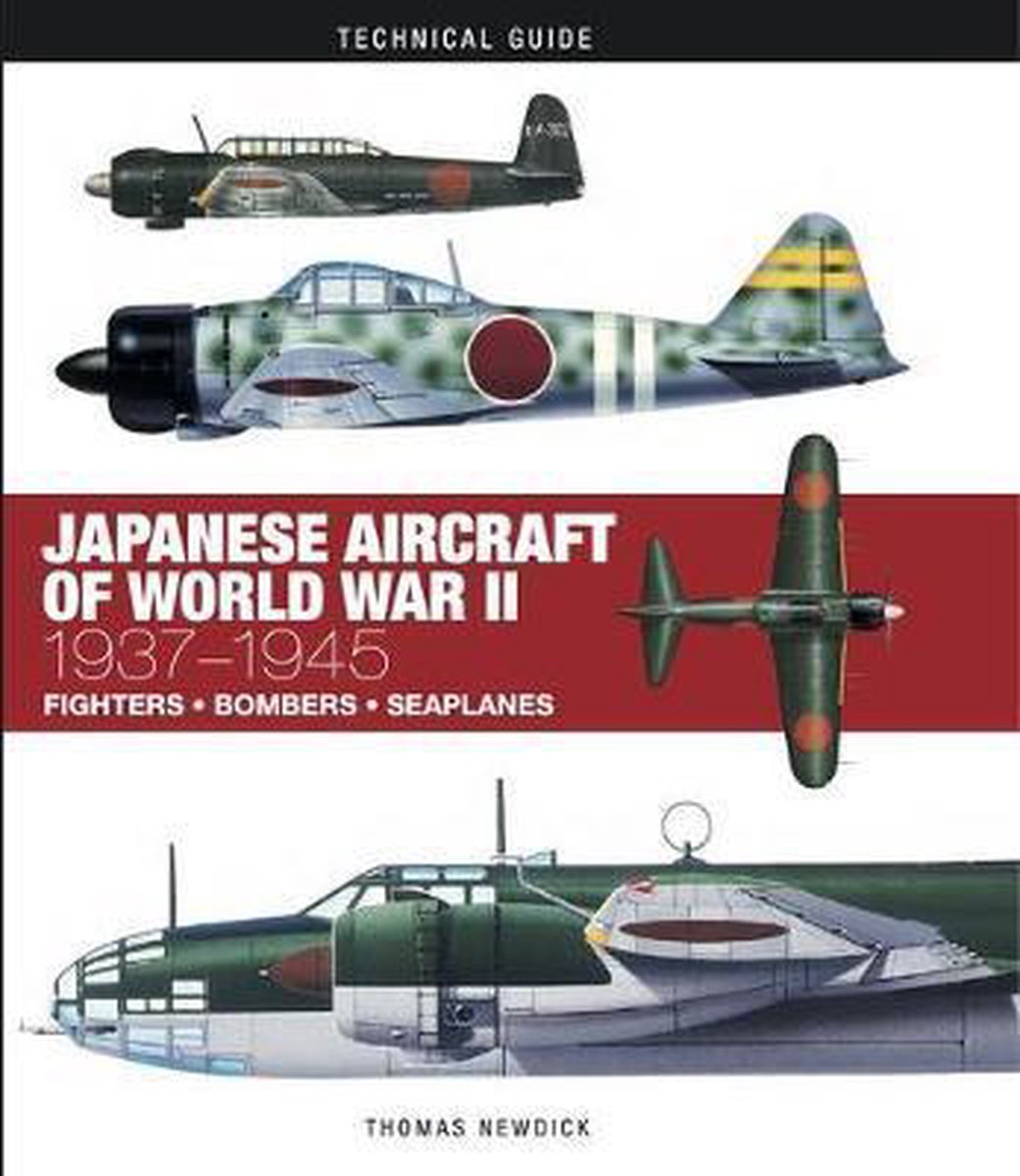
Japanese Aircraft Of World War Ii, Thomas Newdick
On September 13, 1940, the Zeros achieved their first air-to-air victory when 13 A6M2s led by Lt. Saburo Shindo escorted 27 G3M "Nell" medium bombers on the attack on Chunking, against 34 Soviet-made Polikarpov I-15s and mine. -16s of the Chinese Nationalist Air Force, claimed that "all 27" of the Chinese fighters were not lost themselves, but Major Louie Yim-qun put his I-15 riddled with 48 bullets back to base, and Lt. Gao Youxin asked to kill one of Lt. Shindo's Zeroes, but usually 4 Zeroes take some damage in a 1/2 hour dogfight over Chunking.
During the attack on Pearl Harbor, 521 Zeros were operating in the Pacific,
Remote control ww2 planes, japan planes, ww2 toy planes, japan ww2, how many planes did japan have in ww2, japan fighter planes ww2, british ww2 planes, japan ww2 planes, ww2 fighter planes, lego ww2 planes, ww2 planes, rc ww2 planes

0 Comments