Ww2 Italian Navy - We and our partners use cookies to store and/or retrieve information on your device. We and our partners use the information for personalized advertising and content, advertising and content measurement, audience insights and product development. An example of processed data can be a unique identifier stored in a cookie. Some of our partners may process your data as part of a legitimate business interest without seeking your consent. To see the purposes for which they have a legitimate interest or to object to this data processing, please use the supplier list link. The consent given will only be used to process information received from this website. If at any time you would like to change your preferences or withdraw your consent, you can find the link in our privacy policy on our home page.
In our article on the Mediterranean Convoy War, we discussed "Did the Italians Have an Effective Navy During World War II?" We try to answer the question. We argue that the Italian Navy was relatively successful in protecting several important convoys headed for North Africa. Here we will try to answer the same question, but instead we will focus on the use of the navy, which is a very controversial topic, especially among Italian scholars.
Ww2 Italian Navy
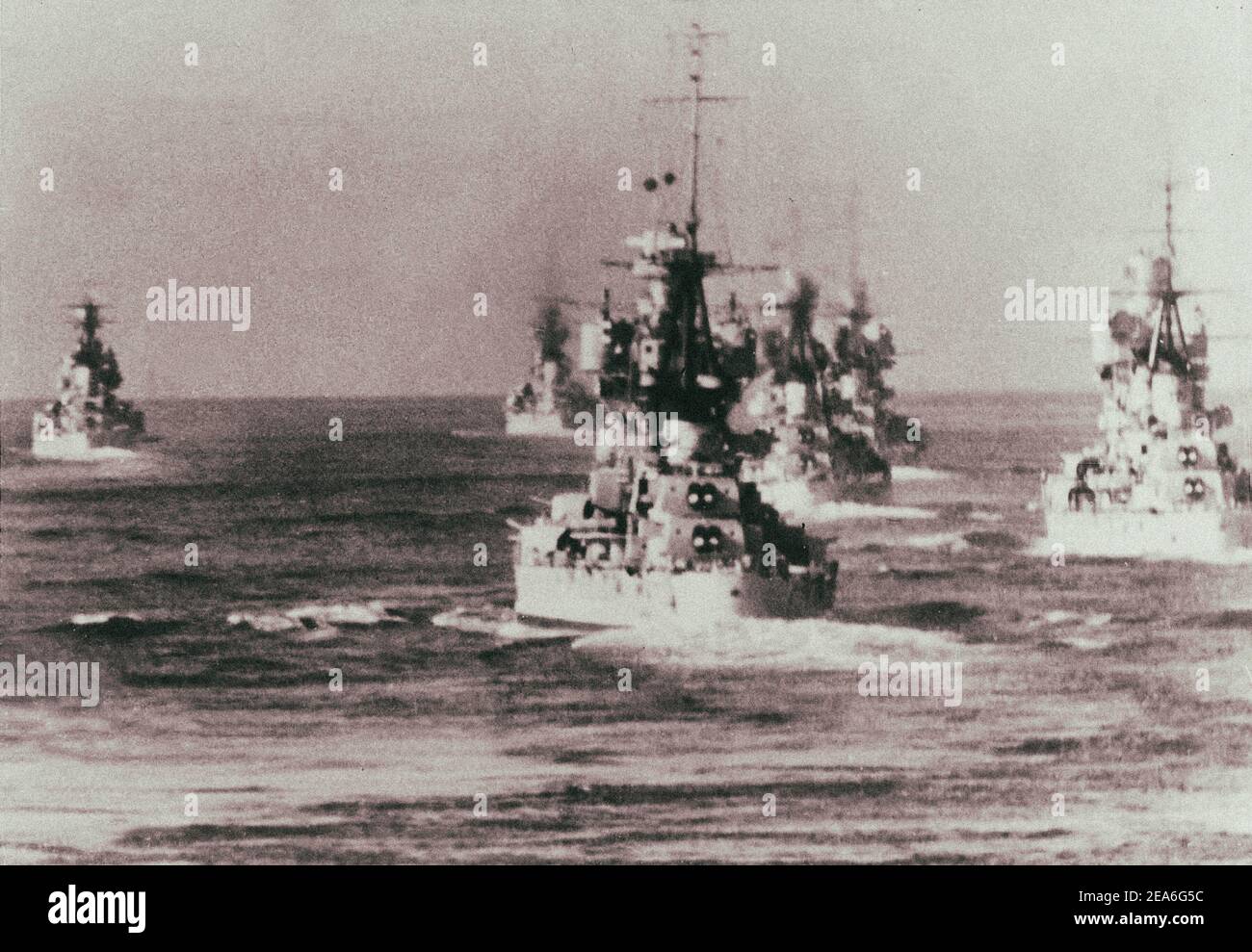
In 1940, the Italian Navy consisted of two rebuilt Cavour-class battleships, two rebuilt Duilio-class battleships and two modernized Littorio-class battleships. On June 10, 1940, only two Cavours were operational, the rest in the fall of the same year. The third and fourth ships of the Littorio class (Roma and Impero) are under construction. However, the Navy quickly realized that new naval ship installations were not a priority. The Regia Marina shifted its focus to the light warships and merchant ships needed for convoy warfare.
German And Italian Aircraft Carriers Of World War Ii: Noppen, Ryan K., Dildy, Douglas C., Wright, Paul: 9781472846761: Books
Almost unable to replace lost capital ships, the Supermarine imposed a stricter approach to commanders at sea. These orders forbade enemy ships to engage in combat, under conditions of clear superiority. However, these very vague orders often lead commanders to be overly cautious. It is important to note the complex and inefficient chain of command in the Regia Marina. Naval commanders had limited autonomy from Rome. This lack of independence often resulted in the loss of valuable time.
The purpose of the battle fleet was to protect large convoys and intercept the enemy as they passed through the Mediterranean. So this doctrine is similar to the idea of the existence of a fleet. It was very different from Japanese doctrine, which focused more on decisive combat.
In the following chapters we will summarize the main activities that made up the main part of the Italian fleet.
A month after the declaration of war, the Italian navy escorted a large convoy to Libya. After the convoy had safely arrived in Benghazi, word arrived that the British Mediterranean fleet was at sea. Admiral Campioni realized that the enemy was trying to block his way back to Taranto. Later, he prepared the entire formation (two ships, 14 cruisers, 26 destroyers) for the attack. The action that followed was decisive, but it confirmed that the naval commander had engaged the enemy.
Italian Cruiser Fiume
In September, the fleet sailed to intercept a British convoy at Malta, but failed to intercept the enemy.
In November 1940, the famous attack on Taranto crippled the Italian navy. The ships Littiorio, Caio Duilio and Conte di Cavour were sunk in the attack. Stories after the battle often cite the attack as a breakdown in Italian morale and a confrontation with the enemy.
However, on 17 November, six days after the attack, Admiral Campioni deployed his only battleships (Vittorio Veneto and Giulio Cesare) in a major operation to intercept a British convoy intended to transfer Hurricane fighters to Malta in Operation White. When the British realized that the Regia Marina was at sea with overwhelming force, they launched 12 fighter aircraft from the carrier and withdrew. Due to the early launch, only two aircraft reached Malta, resulting in a complete failure of the mission.
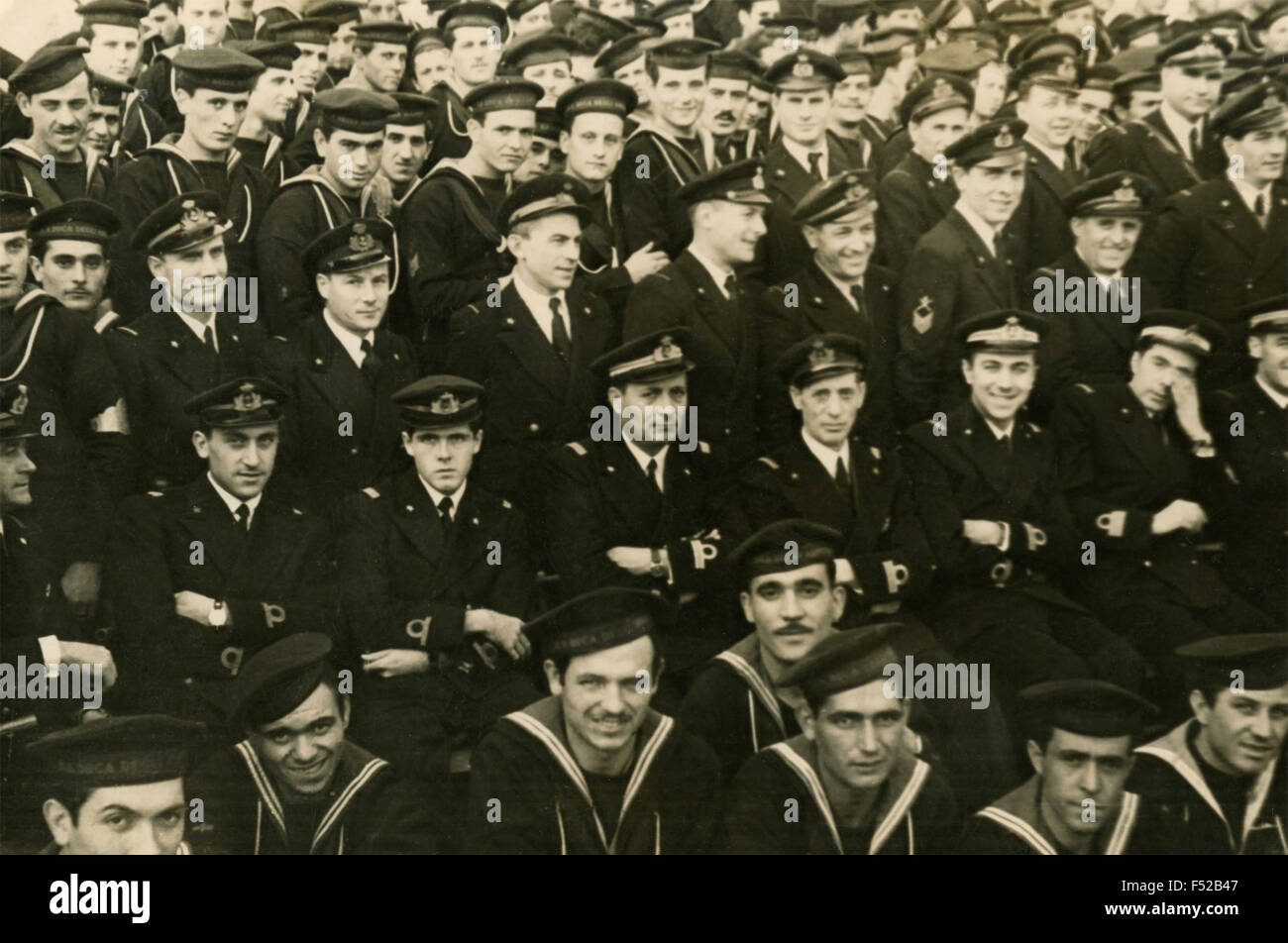
A week later, the Royal Navy launched another operation, this time with a more complex and important escort. The Regia Marina again left port to engage the enemy. However, misjudging the timing caused Admiral Campione to misjudge the situation, missing a good opportunity to strike hard against the Royal Navy. The exchange of fire during this event is known as the Battle of Cape Spartivento/Teulada. Shortly after the battle, Admiral Ichino replaced Admiral Campioni as Navy Commander.
Italian Forces And Industry In Early World War 2 (1939 1940)
HMS Manchester takes fire from Italian ships during the Battle of Capo Teulado. Image courtesy of HMS Sheffield.
In February 1941, a British formation from Gibraltar managed to bomb Genoa. The Italian fleet at sea attempted to intercept them, but again a misidentification of weather conditions prevented the Regia Marina from reacting.
The first half of 1941 witnessed a dark chapter in the history of the Italian Navy. It was marked by the Cape Matapan disaster, which resulted in the loss of three cruisers, two destroyers and 2,331 men. This impromptu operation was prompted by political interference and German pressure on the Regia Marina. Coupled with ULTRA's lack of element of surprise, these are factors in the tragedy.
Photo of Bolzan attacking a swordboat in the battle at Cape Matapan. This image is of the second Swordfish that dropped a torpedo in the lower left corner of the image.
Italy, 20th Century, Second World War
In December 1941, the Regia Marina recovered when five of the six ships returned. These ships actively escorted important convoys targeting Oxen forces in North Africa, supporting the British offensive in Operation Crossroads. During the First Battle of the Gulf of Sirte, the ships Littorio, Giulio Cesare and Caio Duilio safely followed the merchant ships and attempted to intercept the British convoy.
In March 1942, another operation for Malta began. The convoy left Alexandria accompanied by five cruisers and 18 destroyers. Admiral Ichino initiated the suspension. He deployed Littorio with a frigate, three cruisers and eight destroyers. The two formations met in naval conditions, which caused the second battle in the Gulf of Sirte.
During the exchange of fire, Italian troops clashed with several British units. But as darkness approached, Ichino ordered his ships to return to port. Although the Italians withdrew, their engagement resulted in expensive fuel consumption and reduced autonomy for the British escort ships. As a result, the convoy went to Malta alone. Over the next few days, German and Italian bombers attacked many of these ships. As a result, Malta received only 5,000 tonnes of the 25,000 tonnes of supplies intended for the island.

Air raids on Malta and the losses inflicted on their convoys prompted the Royal Navy to launch two major counter-attack operations in the summer of 1942 (Operation Harpoon/Force and Operation Pedestal). These operations resulted in the largest air-sea battles ever fought in the Mediterranean. Operation Harpoon/Vigorous witnessed the last spectacular action of the Italian Navy. Vittorio Veneto and Littorio again aggressively intercepted the British convoy. Their presence eventually prompted the Royal Navy to withdraw and plan a restart operation for the following month.
Ww1 Ww2 Italian Navy Officer's Service Sword & Scabbard
After June 1942, fuel shortages forced the Regia Marina to limit the deployment of operational ships. Cruisers and destroyers took part in the last battles before the war in 1943.
Despite post-war criticism of the Regia Marina's wartime performance, the Regia Marina used its ships very wisely during World War II. With a critical strategic situation in Italy, a lack of airship coordination, a lack of radar, and a complex chain of command, the Navy fought alone and achieved some success in 1940 and 1941, before learning some hard lessons. They forced the British. put a lot of effort into the Mediterranean theater, an element that cannot be overlooked.
However, it must be remembered that the Regia Marina was largely unsuccessful in intercepting Royal Navy convoys supplying Malta. For 1940 and 1941 it was clear that in 1942 the Regia Marina, Luftwaffe and Regia Aeronautica suffered even greater losses, eventually forcing the Allies to launch Operation Pedestal. Thus, the Italians (and the Germans) could not completely eliminate the danger of the Axis convoys on their way to Libya.
It must always be remembered that the terrible sea-air cooperation between the Italian armed forces led to poor naval reconnaissance, which ultimately hampered the Regia Marine's ability to intercept the British at sea.
Naval Analyses: Fleets #4: Italian Navy, German Navy, Russian Navy And Japanese Navy In Wwii
Returning to the main purpose of the Regia Marine, we must also remember that the Italians used warships to push their convoys across the Mediterranean during the period when the threat to Malta was at its peak (from December 1941 to March 1942).
"Operationally, the Italian ships performed well and were an important part of the successful naval battle waged by the Regia Marina. The Italians succeeded in achieving their main objective.
Ww2 navy veterans, italian ww2, ww2 navy planes, italian navy ww2, italian navy in ww2, ww2 navy dog tags, navy ww2, navy records ww2, ww2 navy medals, italian navy uniform ww2, ww2 italian navy ships, us navy in ww2

0 Comments