Military 6.8 Spc - Tags: ***, 300 Blackout, 5.56mm, 6.5 Grendel, 6.8mm, MK262, Remington, SPC, Special Purpose Cartridge, Special Purpose Rifle
Bullets from the author's collection, from left to right: 5,56x45mm Mk. 262 synthetic units. 1 OTM, 6.8x43mm SPC 115gr Sierra OTM, 7.62x39mm M67 FMJ.
Military 6.8 Spc
The 5.56mm M855 round has received significant criticism for its finishing characteristics. Detractors point out that when fired from a barrel that is too short, or when the bullet slows down due to its relatively obscure shape—or when the bullet hits the target—when the strike velocity is too low, the round fails partially. Very low angle of attack.
Spc Vs 6.5 Creedmoor
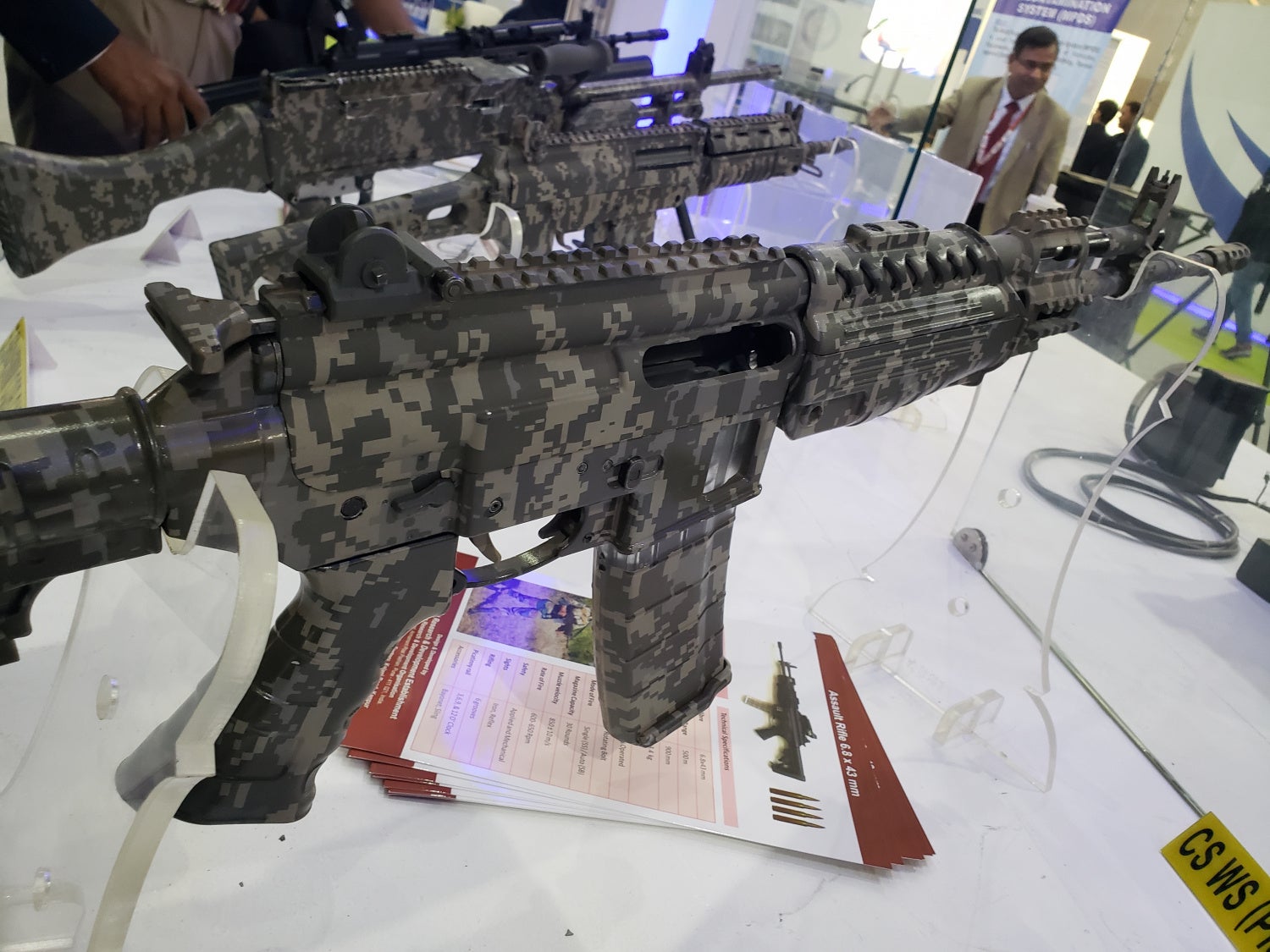
This is one of the reasons I find it so baffling that one of the more popular 5.56mm alternatives—which many offer to the military as a commercial improvement in performance—offers even less than the M855 in these benchmarks. The round is the 6.8mm Remington Special Purpose cartridge.
The history of the 6.8mm SPC round is not the subject of this article, but Christopher R. On page 153 of Bartowski's book The Black Rifle II: The M16 Into The 21st Century:
[i] In early 2002, soldiers of the 5th Special Forces Group (APN), commanded by MSG Stephen Holland, received approval to begin a proof-of-concept to develop a new capability beyond the existing 5.45 scope incapacity, lethality and lethality. NATO x39mm and PRC cartridges 5.8x39mm, 7.62x39mm and 5.56x45mm. This initiative is a grassroots effort to include the USMC MEU-SOC to provide an improved combat capability for Special Operations Forces and light infantry soldiers. This was the original proposed programming evolution of the SOPMOD Mk12 Special Purpose Rifle System (SPR), and the interim result was to field 77-grain Mk262 ammunition, which was later converted to Enhanced Rifle Cartridge Capacity (ERC). The average bore diameter is 6.5mm, 6.8mm or 7mm. With the Mk12 SPR's already proven combat success, the SPR concept development team turned to manufacturers in the US ammunition industry for help. To start the project, the companies involved in the development agreed to do so at their own expense. The final product will help the US military fight the Global War on Terror (GWOT) by better equipping and boosting morale. Based on 30 briefed Remington commercial cases, the initial performance capabilities evaluation of the prototype cartridges was assigned to the USAMU Ammunition Division headed by Troy Lawton. Industry participation to consider the project at no cost to the government was supported by Sean Dwyer at Remington, who said Remington wanted to play its part in the global war on terror and provide ammunition manufacturing capability. Remington using cartridges supplied by Sierra and Hornady. Several propellants have been revised to provide improved powder performance, including Western Powders Ramshot, Precision Arms, and submissions from St. Marks Powder Company. These companies have developed powders specifically for the 6.8mm Remington SPC cartridge and will provide select propellant sizes for final assembly of ammunition by Remington. The Special Forces SPC requires that the powder used be manufactured in the United States and contain an organic flash suppressant to reduce muzzle flash in low-light conditions. Remington began final development of the SPC cartridge in the fall of 2001, using a Wildcat brass concept MSG Holland had developed from 30 Remington cartridge cases. Chris Murray of the US Army Marksmanship prepared AutoCAD drawings of prototypes in the same cartridge case. Remington went to work on standardizing the shoulder angle and neck length. Initial trial production of the ammunition began at Remington in the first quarter of 2002 and it went into full production in August 2003. Numerous ballistic performance evaluations were conducted during this period, including tests for accuracy and reliability. Special purpose cartridges in 6.5mm, 6.8mm and 7mm were reviewed to determine the bore size that would best provide the capabilities soldiers needed in combat. Once all performance data had been collected, the team shared the results with the commander and suggested that the 6.8mm would provide the best overall station, reliability and accurate performance out to 450 meters. This recommendation has been approved. Final performance results for the 6.8x43mm Remington SPC have been independently confirmed by the FBI's Division of Firearms Training and USNR/Stanford University.
It is worth examining in detail the dimensions of the 6.8 mm circle. The cartridge case is based on a rimless Remington. It uses the same case taper and shoulder angle as the 5.56mm rifle cartridge, with beta angles of 0.5 and 23 degrees, respectively. The maximum length is 1.6864 or 42.83 mm. It has an overall length of 5.56mm, 2.26/57.4mm, although some magazines are advertised as 2.315×58.8mm long, and LWRC’s purpose-built Six8 rifle, which uses proprietary magazines, is offered in 2.32×58.9mm. Cartridge capacity is between 34.8 and 36.9 g of water (2.255-2.391 cc), 14-21% more than in 5.56x45mm. 277 diameter projectiles, although they are limited in their selection by overall length. Although the diameter of the projectile is generally the same, the 6.8mm Remington required entirely new ballistics as opposed to existing .270 caliber rounds.
Gr Armor Piercing 20 Round Box
SAAMI chambers the 6.8mm Remington Special Purpose cartridge. Note the tolerance shown in the figure after the “-” signs; They will not be discussed in this article.
I find it interesting that a round designed with a precision-tuned sniper rifle in mind has such a short velocity of inertia and low muzzle velocity. In general, medium/long-range precision weapon platforms place a premium on both ballistic coefficient and projectile velocity, striving to achieve a laser-like trajectory and retain as much energy as possible. 6.8mm SPC works in exactly the opposite direction.
A plunger bullet is the curved part of the projectile that protrudes outside the case. The ideal bullet shape includes the longest mob bullet as possible, while keeping the Sears-Hack body shape as close as possible. Increasing the length of the plunger either increases the overall length of the cartridge or decreases the length of the case (unless the diameter of the case head is increased, which reduces its capacity). Depending on the cartridge design within a given OAL, longer subs come with lower case capacity and lower muzzle velocity, but adopting this generally comes with the advantage of better velocity retention at distances beyond one hundred metres.

In light of this, the maximum plunger length of the 6.8mm SPC was the first cartridge design concern. Because the ogive is only 2.07 calibers, the maximum plunger length for the 6.8 SPC is shorter than that of the 5.56×45mm or 7.62×39mm cartridges. This is too short for a rifle cartridge designed for maximum effectiveness out to 450 meters, and limits the form factor for second compatible projectiles to 1.15 i7 (low form factors result in high ballistic coefficients). 1.32 up to i7 processor. By comparison, the M855 Projectile offers a 1,166 i7 form factor, and it's not particularly well streamlined. The 5.56mm round compatible precision ballistics offer i7 form factors as low as 1.09. Even when using longer magazines allowing for longer, more accurate 5.56mm projectiles to be used, the available relative space is not much greater than for the 5.56mm and 7.62x39mm cartridges. Also, no manufacturers seem to be making .277 projectiles designed for these long magazines, so they only offer a velocity advantage to handloaders.
Grendel Vs 6.5 Creedmoor Vs 6.8 Western Rifles And Ballistics
This means that - at best - the 6.8mm SPC round can accommodate projectiles with a ballistic pattern similar to the M855. Enhanced ballistic formats—including those compatible with the standard 5.56mm—do not hold the 6.8mm SPC cartridge when loaded along the standard magazine length.
This is improved by the 6.8mm limitation of the small aspect ratios. A projectile's accuracy ratio is the ratio of its length to its diameter, and is a factor in the ballistic coefficient of the projectile (in general, bullets with higher purity ratios have better ballistic coefficients). Because of the 6.8mm SPC's wider projectile, it is more difficult to accommodate finely sided bullets (such as the M855A1's leadless projectiles), and significantly reduces the capacity of the round case. This is closely related to the relative efficiency of the round.
Compared to rounds such as the 5.56mm or 7.62×51mm, the 6.8mm SPC has a lower relative capacity. It is the ratio of case capacity to bearing cross-sectional area and is an important indicator of performance. The ideally ejected round propels a bullet with a high sectional density and a high rate of finesse
Spc certification, spc military acronym, spc military abbreviation, spc military meaning, 68 spc, spc military, spc software, spc tutoring, 6.8 spc military use, 68 spc brass, military rank spc, what is spc in military

0 Comments